

IS IT A DIRE FUTURE FOR TRACK ULTRAS?

IS IT A DIRE FUTURE FOR TRACK ULTRAS?

Kate Dzienis • October 29, 2018
By Kate Dzienis

Whilst the future of ultra running in Australia appears to be growing thanks to a steady incline of events coming on board the AURA calendar, the opposite side of the spectrum can at times pop its ugly head over the fence.

Taking note of the type of events most ultra runners participate in, the majority are on trail through natural landscape, which can mean it’s a scary proposition for a new runner wanting to experience the ultra journey – the aid stations can be far, trails can be technical, there is risk of dangerous wildlife encounters, and pacers may be limited or restricted.

But then come the track ultras, conducted on official athletic tracks where entrants can run laps on a certified course and take comfort in knowing their aid stations and support crew are easily accessible. These are terrific for someone’s first ultra, but also a challenge for the more experienced racer who wants to play the mental game and see how they stack up against their own personal best.

In 2018, there were six AURA-listed track events across the country all on certified tracks – the SA 100k Track Championships (50k and 100k), Canberra 48hr Race (48hr, 24hr, 12hr and 6hr), the Sri Chinmoy 24hr Track (24hr, 12hr, 6hr and marathon), Bunbury Track Ultra with 24hr, 12hr, 6hr and 3hr events, BUTTER24 offering 24hr, 12hr, 6hr, marathon, half marathon and 10km track races, and Coburg 24 Hour with 24hr, 12hr and 6hr events.

But there is some distress regarding the future of track events. Let’s not beat around the bush, here is why.

Earlier this year, just shortly after the Bunbury Track Ultra on August 11 and 12, race director and organiser Ron McGlinn informed participants who were immediately asking for next year’s date, that despite a well-run event for 2018, the race itself was in question.


The event began with a decent amount of interest back in 2015, and in 2016 peaked with 89 runners entered, however in 2017 that number dropped to just 75 entrants – and as with all races where people have to withdraw, that total ended up being 68 on the day.


McGlinn explains that this year, in 2018, the Bunbury Track Ultra lay claim to just 47 runners, of which nine were children, making it 38 adults (including teams).


“I guess like all things, the reasons are varied and complicated,” he says.


“In 2015 when Track Ultra kicked off ,there were a number of gaps in the ultra calendar, and there was a genuine need for our own 24hr track event in WA.


“Since then, there has been an explosion in the WA ultra-scene with lots of great events close to where people live, which is Perth.


“Logistically, it is harder for people to travel (Bunbury is 170kms south of Perth), and being brutally honest with myself, track ultras appeal to only a very small cross section of the running community, so it naturally attracts less competitors.”


McGlinn’s intent was to provide an event for WA runners, the opportunity to run under optimal conditions on a track, and let West Aussies enter a track race in their own state rather than having to fly over east.


“This has been in decline ever since, and is no longer self-supporting,” he says.


“An event has to be planned months in advance, and items such as trophies and medals have to be ordered and paid for in that time, well and truly before we have the numbers to recoup any of those outgoing costs.


“This year the vast majority of our entries came in the last couple weeks prior to the event, and it only seems to be getting worse, with many people waiting until the very last minute to enter.”


Sadly, McGlinn will have to make some hard decisions about what is viable and what is not.


With a 40% drop in numbers for 2018, realistically it’s a struggle with increasing costs and fewer entrants, and at this point, McGlinn has stated that running the Track Ultra in 2019 was slim.


Coburg 24hr race director Tim Erickson has weighed in, saying his event has also seen numbers dropped due to a variety of factors, but entrants are slowly being increased again.


“In the 1990s with the demise of the Westfield Run, our Coburg 24hr Carnival numbers dropped drastically, bottoming at an all-time low of 14 in 1999,” he recalls.


“During the 1990s a Relay Division had been added to provide further critical mass, but was only partially successful. In fact, some felt it was more effort than it was worth; around 2000, the Coburg Harriers were thinking of calling it quits and winding up the event.
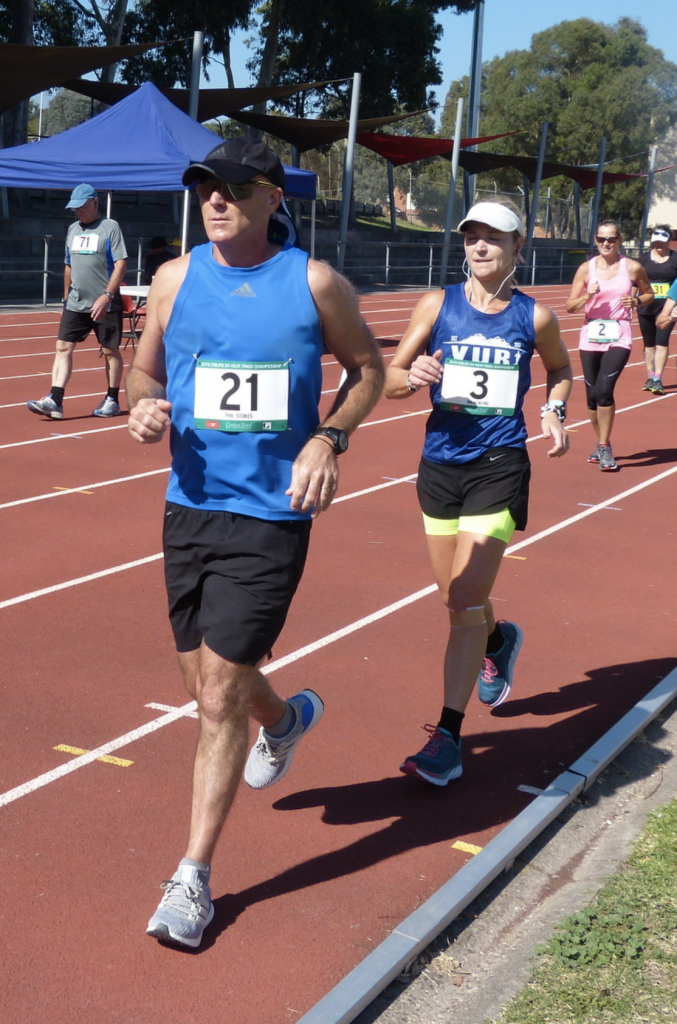
“In 2002, the club accepted a request from the Australian Centurions for them to incorporate their annual 24hr Walk Carnival into the Coburg 24hr Carnival, as they too had been suffering a similar numbers drain.


“The 2002 Coburg 24hr Carnival was extended to include 24hr, 12hr and 6hr walk divisions and became a joint run/walk carnival, with both clubs involved.


“The overall number of competitors that year rose from 31 to 52.


“As Coburg was using a timing system that was still partly manual, a cap of around 50 had to be placed on the event and, by 2007, demand was outstripping places. As a consequence of this event popularity, the carnival was split into two in 2008, with the 6hr staged in March and the 24hr in April.


“With the creation of the Canberra 48hr Carnival in March 2016, all of a sudden we lost our exclusive eastern seaboard track presence in the March/April region, and our overall carnival numbers had dropped to 65 by 2017.


“We then decided to recombine back into one carnival, which we did in 2018, when we attracted 56 entrants in our 24hr/12hr/6hr single weekend carnival; as we were now using a fully automated chip recording system, the big numbers were no longer an issue.


“For 2019, we have added an additional marathon run/walk category and, with judicious use of separate lanes and separate start times and lots of advertising, we hope to grow the overall carnival numbers to around 80+.”


AURA president Rob Donkersloot reveals it’s not surprising that McGlinn is making this move.


“We can’t expect our race directors to hold these events for purely altruistic reasons, and even worse take a financial hit,” he says.


“From what I see, the major growth is on the trail, and in shorter distances. Getting these people to transition to a track event could be difficult, it’s almost a different sport.


“West Australian sports participants, not just ultra runners, are used to having spend a thousand dollars plus to attend events in the eastern states; that’s not the same for those living in the east where often airfares can be had for $100.


“The other thing to consider is the increase in the number of 24hr events around Australia. A few years ago, there were around four events total, but this year there are seven, and that doesn’t count Auckland, all vying for the same runners.”


Sadly, it has become a numbers game for race directors of track events, where they must take in to consideration the cost of chip systems, track hire, and first aid on limited budgets. The Sri Chinmoy 24hr Track has been running for almost four decades, and the Coburg 24hr for more than 30 years.


We are hoping the Bunbury Track Ultra will see years of successful events in the future.


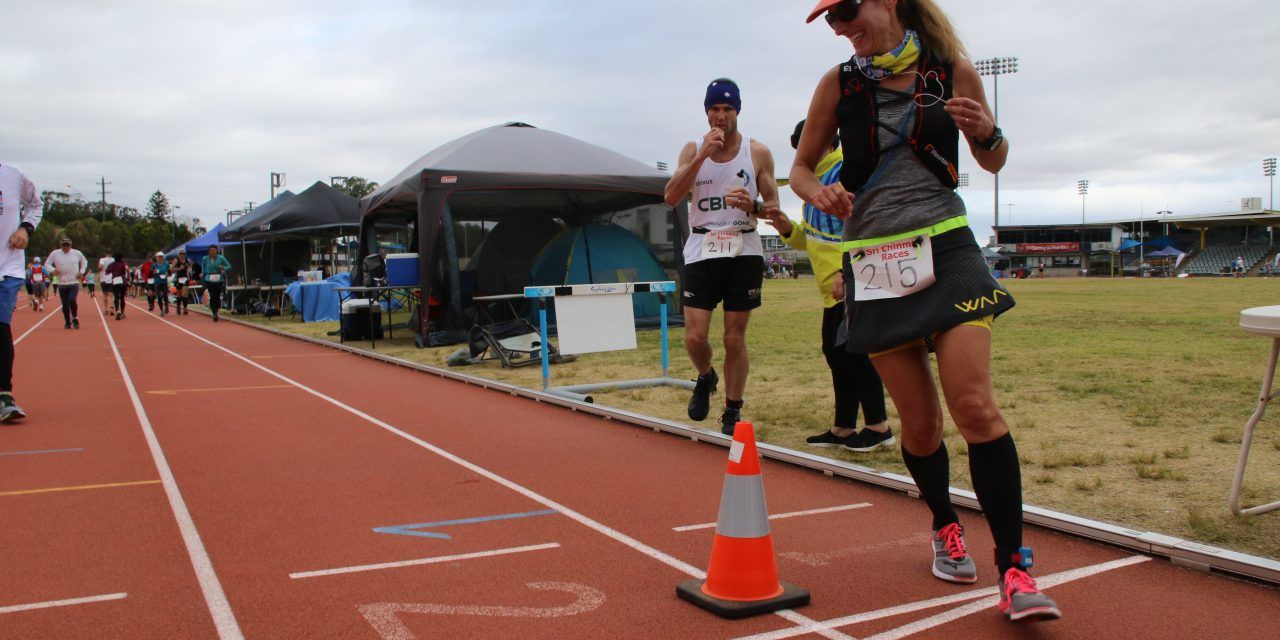
Pictured (Feature): AURA member Heather Hawkins racing at the 2018 Sri Chinmoy.

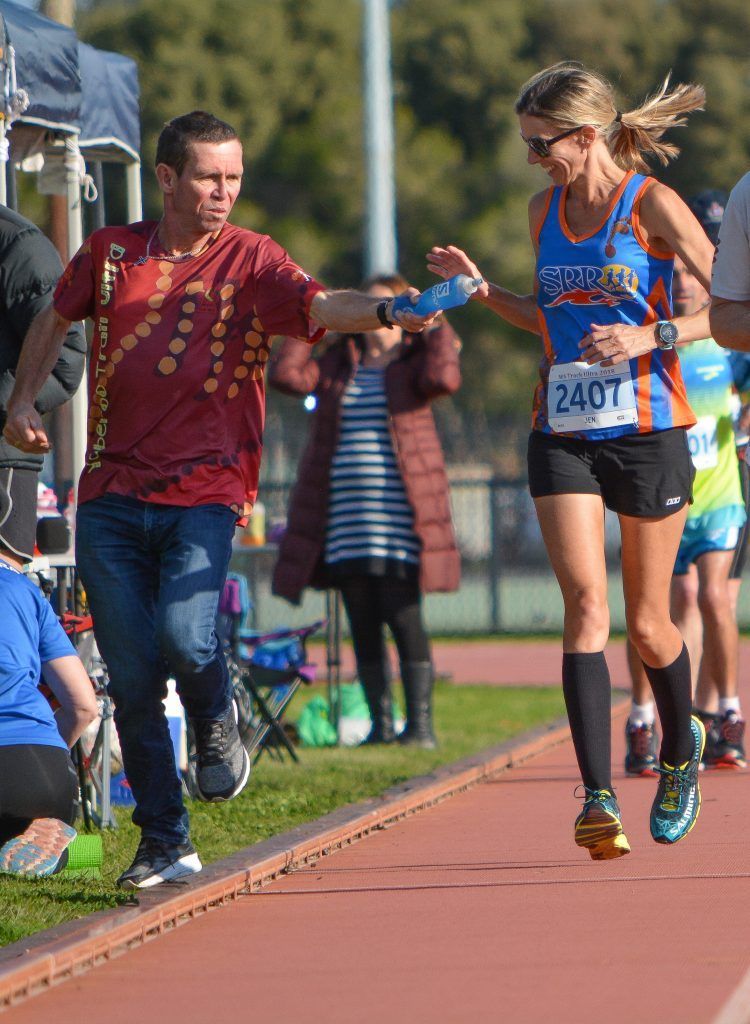
Pictured 2: Jen Millum at the 2018 Bunbury Track Ultra.

Pictured 3: Runners at the Coburg 24hr this year.

By Jin Kato July 8, 2026
The world-class trails of Kunanyi/Mt Wellington will play centre-stage for one of the country’s fastest-growing sports, after the Kunanyi Mountain Run (KMR) was awarded the hosting rights for the first-ever combined Australian Mountain and Trail Running Championships (AMTRC). KMR was awarded the National Championships after a competitive bid process, overseen by the Australian Ultra and Trail Running Association (AUTRA) and Australian Athletics (AA). AUTRA President, John Claridge, said that KMR “offered everything we were looking for”. “World-class trails, proven event management and a passionate community. It provides the perfect stage for Australia's first combined National Trail Championships," he said. It’s expected that Australia’s elite mountain and trail running athletes, and support crew, will travel to Hobart, as they vie for a spot in the Australian team that competes at the 2027 World Mountain and Trail Running Championships. "This is a landmark moment for trail running in Australia,” Mr Claridge said. "We're excited about what this championship represents; not just next year, but for the future of trail running in Australia... helping grow the sport and inspire the next generation of trail runners." The 2027 AMTRC at KMR will be the first time that all championship distances have been held together, at the one festival. “It aligns us more closely with the way World Championships are presented, creating a stronger pathway for athletes and raising the profile of the sport,” Mr Claridge said. KMR, a 3-day trail running festival which has been held annually since 2022, expects to draw more than 1500 runners and hikers from across Tasmania, Australia and internationally next year. The AMTRC will be embedded within KMR’s existing event program, allowing elite athletes to compete for the national titles, while sharing the same spectacular trails and event-experience as recreational runners. “We’re honoured to have been selected as host,” KMR’s founder and director, Lincoln Quilliam said. “KMR continues to welcome runners, and hikers, of all abilities. From the elites who want to represent Australia on the world stage, the group of mates or work colleagues who run the team relay together, the mums returning to running after having a baby, as well as those who are trying trail running for the very first time,” Mr Quilliam said. Tasmanian runner, Jessica Collins, who has represented Australia, said it was exciting news for KMR, Tasmania and the sport. “This is such a great opportunity for Australian athletes. I’ve run many of the KMR events and know the courses and the terrain are on par with what we see at the World Champs,” she said. The City of Hobart has supported Kunanyi Mountain Run since its inception, and Lord Mayor Anna Reynolds said she was “thrilled” with the news. “Events like this not only showcase the natural beauty of our region but also reinforce Hobart’s reputation as a vibrant destination for world-class outdoor experiences.” The 2026 edition of KMR brought in $4 million to the Tasmanian economy, generating more than 8000 bed nights across the state, which Alex Heroys, Chief Executive of Destination Southern Tasmania, said was a “significant return for the visitor economy”. “Kunanyi / Mount Wellington is one of Tasmania’s great natural assets, and the Kunanyi Mountain Run shows exactly how powerful events can be in driving regional tourism,” he said. “We have an epic mountain right on Hobart’s doorstep, an airport less than 30 minutes away, and a city that is well set up to welcome thousands of visiting athletes, support crews and spectators.” “This event also reinforces Tasmania’s growing reputation as a world-class trail running destination. With steep, technical trails and real mountain terrain, Kunanyi offers conditions that are genuinely comparable to what athletes will experience at the World Championships, making it an ideal place to compete, train and visit.” For more information: Kunanyi Mountain Run Dates: 19-21 March 2027 Pic credit: David Nolan & Ryan Slater
By Jin Kato July 7, 2026
AUTRA are excited to announce our national championship events for 2027!
June 29, 2026
Greg Wilson recaps his time at the 2026 New Zealand 6 Day Ultra
June 29, 2026
Isobel tait covers what actually changes when the sun goes down
By John Claridge June 29, 2026
APRIL 2026
LOAD MORE

share this

IN OTHER NEWS

By Jin Kato July 8, 2026
The world-class trails of Kunanyi/Mt Wellington will play centre-stage for one of the country’s fastest-growing sports, after the Kunanyi Mountain Run (KMR) was awarded the hosting rights for the first-ever combined Australian Mountain and Trail Running Championships (AMTRC). KMR was awarded the National Championships after a competitive bid process, overseen by the Australian Ultra and Trail Running Association (AUTRA) and Australian Athletics (AA). AUTRA President, John Claridge, said that KMR “offered everything we were looking for”. “World-class trails, proven event management and a passionate community. It provides the perfect stage for Australia's first combined National Trail Championships," he said. It’s expected that Australia’s elite mountain and trail running athletes, and support crew, will travel to Hobart, as they vie for a spot in the Australian team that competes at the 2027 World Mountain and Trail Running Championships. "This is a landmark moment for trail running in Australia,” Mr Claridge said. "We're excited about what this championship represents; not just next year, but for the future of trail running in Australia... helping grow the sport and inspire the next generation of trail runners." The 2027 AMTRC at KMR will be the first time that all championship distances have been held together, at the one festival. “It aligns us more closely with the way World Championships are presented, creating a stronger pathway for athletes and raising the profile of the sport,” Mr Claridge said. KMR, a 3-day trail running festival which has been held annually since 2022, expects to draw more than 1500 runners and hikers from across Tasmania, Australia and internationally next year. The AMTRC will be embedded within KMR’s existing event program, allowing elite athletes to compete for the national titles, while sharing the same spectacular trails and event-experience as recreational runners. “We’re honoured to have been selected as host,” KMR’s founder and director, Lincoln Quilliam said. “KMR continues to welcome runners, and hikers, of all abilities. From the elites who want to represent Australia on the world stage, the group of mates or work colleagues who run the team relay together, the mums returning to running after having a baby, as well as those who are trying trail running for the very first time,” Mr Quilliam said. Tasmanian runner, Jessica Collins, who has represented Australia, said it was exciting news for KMR, Tasmania and the sport. “This is such a great opportunity for Australian athletes. I’ve run many of the KMR events and know the courses and the terrain are on par with what we see at the World Champs,” she said. The City of Hobart has supported Kunanyi Mountain Run since its inception, and Lord Mayor Anna Reynolds said she was “thrilled” with the news. “Events like this not only showcase the natural beauty of our region but also reinforce Hobart’s reputation as a vibrant destination for world-class outdoor experiences.” The 2026 edition of KMR brought in $4 million to the Tasmanian economy, generating more than 8000 bed nights across the state, which Alex Heroys, Chief Executive of Destination Southern Tasmania, said was a “significant return for the visitor economy”. “Kunanyi / Mount Wellington is one of Tasmania’s great natural assets, and the Kunanyi Mountain Run shows exactly how powerful events can be in driving regional tourism,” he said. “We have an epic mountain right on Hobart’s doorstep, an airport less than 30 minutes away, and a city that is well set up to welcome thousands of visiting athletes, support crews and spectators.” “This event also reinforces Tasmania’s growing reputation as a world-class trail running destination. With steep, technical trails and real mountain terrain, Kunanyi offers conditions that are genuinely comparable to what athletes will experience at the World Championships, making it an ideal place to compete, train and visit.” For more information: Kunanyi Mountain Run Dates: 19-21 March 2027 Pic credit: David Nolan & Ryan Slater
By Jin Kato July 7, 2026
AUTRA are excited to announce our national championship events for 2027!
June 29, 2026
Greg Wilson recaps his time at the 2026 New Zealand 6 Day Ultra
ALL NEWS